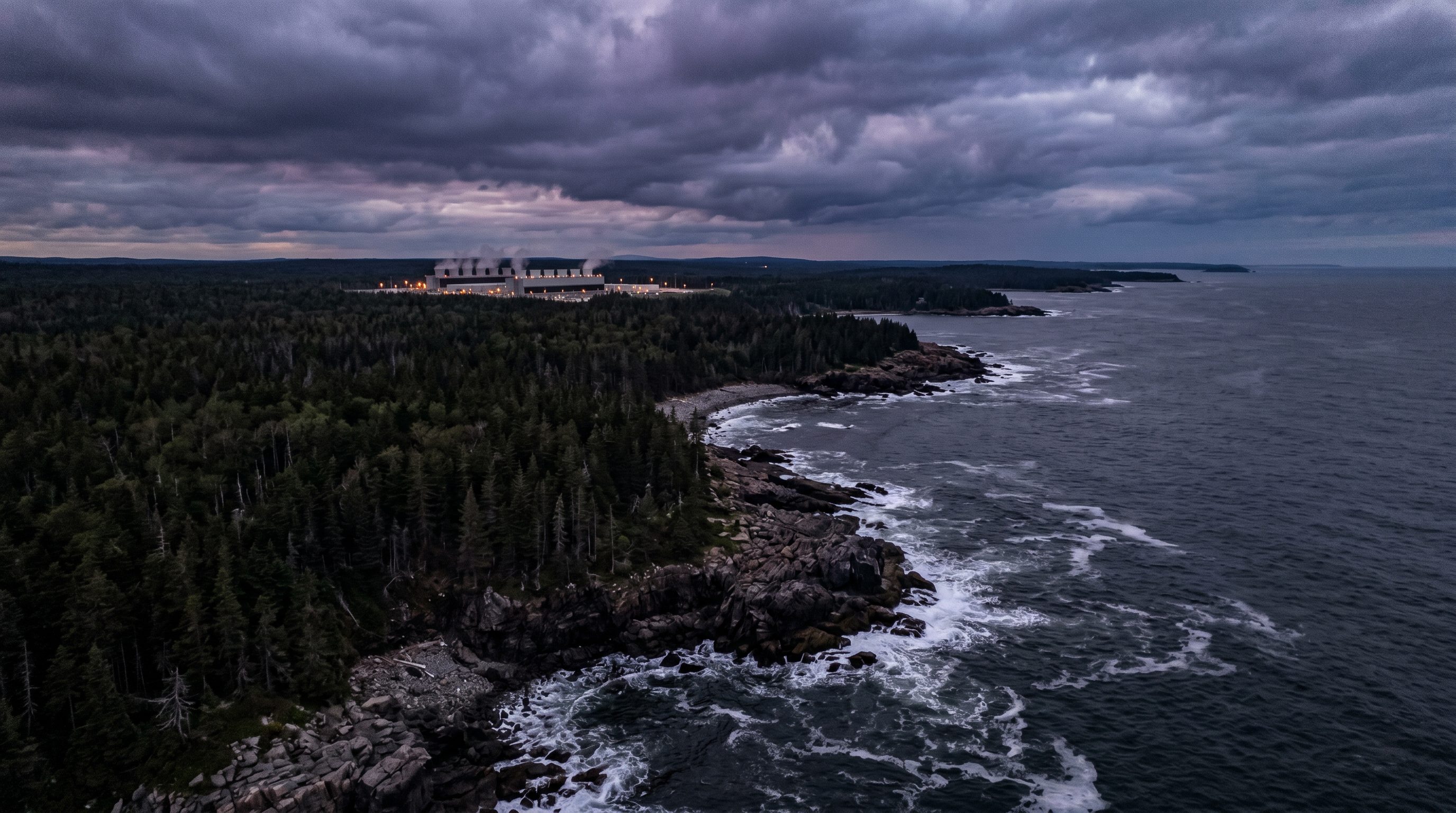
On April 16, 2026, Maine Governor Janet Mills signed LD 307 into law, making Maine the first state in the United States to enact a moratorium on large data center construction. The bill bans state and local governments from approving any data center with a power load of 20 megawatts or more until November 1, 2027. It is the most aggressive legislative action any state has taken against the infrastructure backbone of the AI industry.
The law passed the Maine House 79-62 and the Senate 21-13, with most Democrats in favor and most Republicans opposed, though some bipartisan support emerged in the House. At least 11 other states have introduced similar moratorium bills in 2026, but Maine's is the first to pass both legislative chambers and reach the governor's desk.
What the Law Does
LD 307 is a temporary moratorium, not a permanent ban. According to the Maine House Democrats' statement on the bill, the law:
- Prohibits any municipality, state agency, or quasi-independent state entity from accepting an application for, or issuing, a permit for data centers with a load of 20 megawatts or more
- Creates the Maine Data Center Coordination Council, tasked with evaluating data center impacts on ratepayers, the electric grid, and the environment
- Requires the council to submit a final report with recommendations to the legislature by February 1, 2027
- Expires on November 1, 2027, giving the legislature time to act on the council's findings
The bill was sponsored by Rep. Melanie Sachs, D-Freeport, who described the response from Maine communities as overwhelming: "Since I brought this bill forward, people and communities across the state have been asking the Legislature to take action and temporarily pause these projects, which could have significant impacts on ratepayers, our electric grid and our environment."
Why Maine Acted
The driving concerns are not abstract. U.S. data centers consumed approximately 183 terawatt-hours of electricity in 2024, representing 4.4% of total national energy use. That figure is projected to reach 426 TWh by 2030, according to the same analysis of Department of Energy data. AI-focused data center electricity demand is growing at approximately 30% annually, compared to 9% for conventional server workloads.
The impact is not distributed evenly. In Virginia's "Data Center Alley," data centers consume more than one in four kilowatt-hours of the state's electricity. Research from Carnegie Mellon University estimates that data centers and cryptocurrency mining could increase average U.S. electricity bills by 8% by 2030, potentially exceeding 25% in high-demand markets.
Maine residents are acutely aware of these dynamics. As of April 14, 4,900 Mainers had sent letters to state legislators and Governor Mills in favor of the bill through an Our Power petition campaign. A March 2026 Quinnipiac University national poll found that 65% of Americans oppose AI data centers in their communities, with 72% citing electricity costs, 64% citing water use, and 41% citing noise.
The Projects Affected
The moratorium directly impacts several proposed developments in Maine:
| Location | Developer | Power Load | Status Under LD 307 |
|---|---|---|---|
| Jay (former Androscoggin paper mill) | Sentinel Data Centers LLC (NYC) | Up to 175 MW total (25 MW from grid) | In jeopardy |
| Limestone (former Loring Air Force Base) | LiquidCool Solutions | Originally 26 MW; adjusted to <20 MW | Can proceed |
| Sanford (Southern Maine) | Undisclosed (represented by Preti Flaherty) | Not disclosed | Affected |
The Jay project is the highest-profile casualty. A $550 million proposal from New York City-based Sentinel Data Centers LLC had the support of Jay's town government and planned to redevelop the former Androscoggin paper mill, which closed in 2023. Governor Mills had publicly pushed for an exemption for the Jay project, but the amendment failed in the legislature, and the final bill includes no carve-outs.
LiquidCool Solutions' project at the former Loring Air Force Base, however, remains viable. The company adjusted its electric load from 26 MW to below the 20 MW threshold. Vice chair Herb Zien confirmed the development "is able to move forward with the 20-megawatt limit."
The Opposition
Not everyone sees the moratorium as good policy. Patrick Woodcock, President and CEO of the Maine State Chamber of Commerce, told The Daily Yonder he is "100% against" the blanket ban, arguing it will scare away developers from rural communities that need investment. He also made a forward-looking argument: "The method for advancing next-generation nuclear power is through the balance sheet of these new data centers."
Energy attorney Tony Buxton, whose firm represents a data center proposal in Sanford, framed it as inevitable displacement rather than prevention: "There will be data centers someplace, no matter what Maine does." Buxton sees an opportunity for data centers to fill gaps left in the grid by shuttered industrial customers like paper mills.
The National Picture
Maine is the first domino. According to The AI Consulting Network's tracker, at least 12 states have filed data center moratorium bills in 2026, including New York, Vermont, Maryland, Georgia, Virginia, New Hampshire, Minnesota, Oklahoma, South Dakota, Wisconsin, and Michigan. More than 140 local groups have blocked or delayed over $60 billion in U.S. data center projects in just over a year.
At the federal level, Senators Bernie Sanders and Alexandria Ocasio-Cortez introduced the AI Data Center Moratorium Act (S.4214) in March 2026, proposing a nationwide moratorium on new data center construction. Federal legislation faces significant industry opposition, but the bill signals growing political pressure that could lead to permitting requirements or energy consumption standards.
The scale of the AI infrastructure buildout driving this backlash is staggering. Power demand from data centers in the U.S. could hit 106 gigawatts by 2035, according to BloombergNEF's December 2025 projections, which rose 36% from an outlook published just seven months earlier. New England currently has 30 gigawatts of total installed electricity-generating capacity on its regional grid.
The Bigger Question
Seth Berry, executive director of Our Power and a former Maine legislator, argues the issue crosses party lines: "I really don't think it's fundamentally an issue that belongs to Democrats. I think there's growing concern among a broad swath of the American public about rising electricity costs and about the lack of employment that data centers offer."
That last point is significant. Data centers employ remarkably few people relative to the infrastructure subsidies they receive and the grid strain they create. A facility that draws 150 MW of power and costs $550 million to build might employ 50 permanent staff. The paper mill that previously occupied the Jay site employed hundreds.
The moratorium is ultimately a bet that 18 months of study and deliberation will produce better outcomes than letting the market run unchecked. Whether other states follow Maine's lead, or whether the AI industry routes around these restrictions entirely, will depend on what that study finds and whether voters in other states share Mainers' priorities.

AI-Generated Content
This article was researched, written, and verified by Sonarlink's AI. All claims are sourced from verified publications. No fake bylines.
More from Sonarlink
EU AI Act Enforcement 2026: What Happens on August 2 and Who's At Risk
On August 2, 2026, the EU AI Act enforcement regime activates for GPAI model providers. Fines up to 7% of global revenue...
NVIDIA Vera Rubin GPU 2026: Specs, Speed, and the $1T AI Bet
NVIDIA's Vera Rubin platform — unveiled at CES 2026 and showcased at GTC — delivers 5x inference speed over Blackwell. H...
Anthropic Built Its Most Powerful AI Ever — Then Locked It Away
Anthropic announced Claude Mythos Preview — its most capable model ever — and simultaneously declared the public cannot use it...